Millions of Americans suffer from mental health disorders. Living with this type of condition shouldn’t be something a person “just deals with.”
May is Mental Health Awareness Month. The month of May has been recognized as Mental Health Awareness Month since 1949 in the United States. This movement is designed to find solutions.
Mental Health Awareness Month was created to help eliminate the stigma associated with mental illnesses while raising awareness of various mental health conditions and those people experiencing them. People with mental health issues should have support throughout the year.
This month, let’s take some time to discuss trauma, mental health, and the actions that come with each diagnosis.
More than 51 million people experience mental illness yearly. Supporting Mental Health Awareness Month starts by taking the time to learn more about these disorders. Utilize the various resources that are distributed in May which provide an outline of the stories of people who have dealt with mental health issues.
Develop a positive mental health dialogue with friends, family, and relatives. Offer support when someone is in need, or tell your own story. All these options are great ways to push the support for a mental health professional or person who struggles and needs to take the next step.
These types of interactions can help change someone’s life. We’ll discuss them later, but to understand mental health, we need to see the numbers behind the problem.
Organizations like the Substance Abuse and Mental Health Services Administration (SAMHSA), Centers for Disease Control and Prevention (CDC), and the U.S. Department of Justice provide valuable information and statistics about people with mental health issues.
These statistics show that one in five U.S. adults experience mental illnesses each year. Those with serious mental illnesses result in one in 20 U.S. adults yearly.
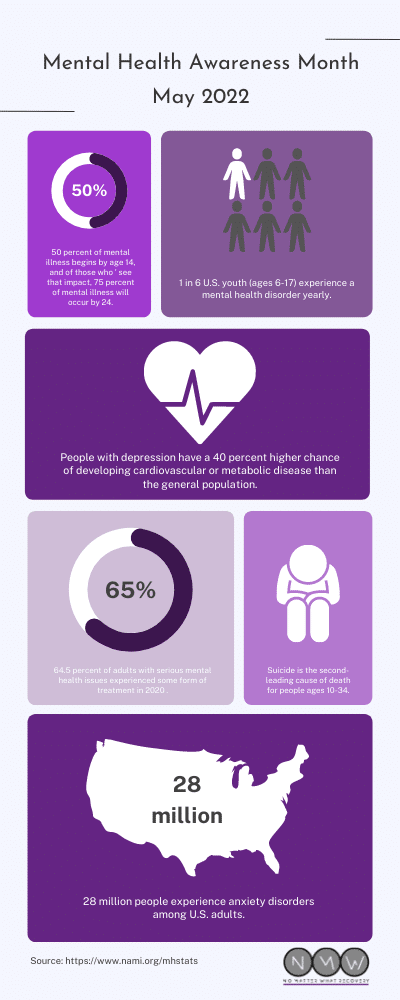
These statistics are a few examples of the impact mental health has on the United States. Mental Health Awareness Month brings necessary awareness to these statistics, but the average American might still not understand how exactly mental health affects each person
Mental health is described as a person’s emotional, psychological, and social well-being. This term is affected by how we feel, think, and act in society. While many individuals are able to manage life’s challenges in healthy ways, others may experience mental health conditions that develop over time due to factors such as trauma, genetics, environmental stress, family dynamics, or life experiences throughout childhood, adolescence, and adulthood.
When mental health concerns go untreated, they can significantly impact a person’s mood, thought patterns, behaviors, relationships, and overall quality of life. At No Matter What Recovery, we recognize that mental health struggles can affect individuals from all backgrounds, including LGBTQ+ individuals and other underserved communities.
There are many different types of mental, behavioral, and emotional health disorders, each requiring individualized care and support to promote long-term wellness and recovery.
Mental health issues usually stem from biological factors, life experiences, or family history. Although these are the most popular factors, other factors contribute to mental health problems.
Keeping track of your loved ones can help limit a co-occurring disorder. Dependency to deal with a mental health issue can result in drinking or drug use.
Although there are dozens of mental health disorders in the world affecting millions of people, anxiety disorder impacts 40 million adults over the age of 18 in the U.S.
Anxiety disorders result in frequent fear and distressing feelings. Often mistaken for common fears like public speaking or interviewing, an anxiety disorder is a debilitating experience that occurs in non-stressful events.
These bouts of anxiety are said to last anywhere from a few seconds to months at a time. The term anxiety covers a lot of specific disorders that fall under this umbrella:
You may have heard of one of these disorders in passing. You may have even experienced one.
Occasional anxiety is something many people have buried deep without being diagnosed with an anxiety disorder. If you have experienced a history of anxiety or other mental health issues, take the time to diagnose your symptoms.
Anxiety disorder can be treated through psychotherapy, medication, or both. Meeting with a health care provider to discuss your symptoms and options could help increase your chances of tackling your diagnosis.
Are you or someone else experiencing mental health problems? If you’re not sure, consider if you’re encountering any of these symptoms:
Symptoms of mental health disorders are difficult to spot. These symptoms do not mean there’s a direct correlation to a disorder. However, if you or a loved one is experiencing any of these examples, take precautions.
Visit your local doctor. Talk to a therapist. Take some time to care for yourself.
Most mental illnesses will not improve on their own without help from a trained professional. If these signs and symptoms go untreated, the illness will likely get worse over time and develop into a mental health disorder followed by substance abuse.
About half of all people that experience a substance abuse disorder will also experience a mental health disorder. Although the two happen concurrently, one doesn’t necessarily cause the other. People will use drugs or alcohol to help self-medicate if they’re reluctant to take medications.
A user may believe that drugs and alcohol “help” them deal with some of the symptoms of a mental health disorder. Substance abuse changes the brain making the use of substances easier or more likely to be used by playing tricks on the body.
To avoid this cycle, someone suffering from a mental health disorder should take the time to invest in tips to stay mentally healthy.
We’ve defined and described the early signs and symptoms of mental health problems, but how should you go about daily tasks and processes to keep yourself mentally healthy?
The first step in managing your emotions is setting healthy boundaries with yourself and others.
In the 21st century, it’s easy to fall into the trap of scrolling social media or the news. Information is available for everyone and it can be difficult to shield yourself from negative and incorrect information.
A difficult but effective way to strengthen your mental health is to limit your consumption. Everyone has the desire to be connected to the world.
Limiting the consumption of information for periods throughout the day can help you process information without making or acting on knee-jerk reactions.
Turn off your notifications and look for other ways to invest your time and brain.
Notifications are a great way to stay informed on a variety of topics, but being updated about a situation that could cause negative mental health results is detrimental to your progress.
It’s easier to check the news on your own time instead of breaking up your day with frequent news breaks. Instead, take this time and spend it with friends, family, the outdoors, or another source of fun.
One of the best ways to keep yourself mentally healthy is to invest time in the gym. People who suffer from a mental health disease often let themselves become overweight, out of shape, or unhealthy. Pouring free time into the gym could lead to a healthy mind and body.
This doesn’t necessarily mean that you need to be in the gym seven days a week pumping iron. Join a spin class, think about yoga, or go for a run. All physical activity can improve day-to-day life.
If you’ve found something that works for you while dealing with a mental health disorder, the next step in the process is bringing awareness to these issues. There are dozens of organizations and ways to spread beneficial information to combat these issues.
We’ve gathered extensive information about mental health disorders and the importance of Mental Health Awareness Month, but awareness alone is not enough. With less than half of individuals experiencing mental health conditions seeking professional help, there is still significant work to be done to reduce stigma, increase education, and encourage open conversations surrounding mental health. This is especially important for LGBTQ+ individuals and other underserved communities, who often face additional barriers to accessing supportive and affirming mental health care.
Openly discussing mental health can create opportunities for deeper understanding and meaningful support. Many people struggling with mental health conditions may hide, minimize, or deny their symptoms due to fear of judgment, shame, or social stigma. By approaching these conversations with empathy, compassion, and a willingness to listen, we can help create environments where individuals feel safer seeking help and support.
Educating yourself and others about the warning signs, symptoms, and realities of mental health disorders is another powerful way to make a difference. The more informed we become, the more effectively we can challenge harmful misconceptions and normalize conversations about emotional well-being, trauma, addiction, and mental health treatment. This includes understanding the unique experiences faced by LGBTQ+ individuals, who may encounter higher rates of anxiety, depression, trauma, and substance use due to discrimination, rejection, or social isolation.
Teaching children from an early age to treat others with kindness, respect, acceptance, and compassion can also create lasting cultural change. Encouraging empathy toward people experiencing mental health challenges helps build stronger, more supportive communities where individuals are less likely to suffer in silence.
One of the most impactful ways to support Mental Health Awareness Month is by becoming actively involved. This may include volunteering, participating in awareness events, supporting advocacy organizations, or sharing educational resources throughout the year, not just during the month of May.
Organizations such as Mental Health America (MHA), Do Something, and IDONTMIND provide valuable mental health education, advocacy opportunities, and supportive resources for individuals and families navigating mental health challenges. There are countless ways to contribute your time, voice, and support to improving mental health awareness and accessibility.
Progress in mental health advocacy happens when individuals actively seek opportunities to create change, challenge stigma, and support those in need. Whether through education, advocacy, compassion, or community involvement, every effort can help reshape the way mental health is understood and discussed.
Developing a relationship with a trusted treatment center can also make a meaningful difference. Professional mental health and addiction treatment programs provide individuals with the clinical care, emotional support, and evidence-based therapies needed to begin healing and move toward long-term wellness and recovery.
Now we know that May is Mental Health Awareness Month. Although we throw our best efforts to avoid these disorders and problems, sometimes they get the best of us.
No Matter What Recovery is a dual-diagnosis substance abuse and mental health treatment center based in Los Angeles, offering structured mental health rehab in West Hollywood for adults ready to begin recovery. Our facility has a strong focus on the LGBTQ community and addresses trauma situations and the triggers that drive people to drink and use drugs.
We provide our clients with a plan to create success at the end of a road that many believe cannot produce success. We want this to be your last stop and offer guidance all the way through.
To learn more, visit our website and take a look at our residences, programs, and resources. Our facility will give you the tools to heal your mind, body, and spirit.